
Bath Grab Rails for Elderly Parents: Safe, Stylish Support in the Bathroom
If you're reading this, you're probably worried about a parent or grandparent slipping in the bath or shower. That concern is well-founded - and acting on it could prevent a life-changing injury.
Fast Answer: Do Elderly People Really Need Bath Grab Rails?
Yes. Grab rails are essential for preventing slips and falls in bathrooms, which remain one of the most dangerous rooms in any house for people over 65. In England alone, there are roughly 221,600 emergency hospital admissions annually for falls among over-65s. In the US, fall-related medical costs reach an estimated $50 billion per year. For older Australians, fall hospitalisation rates are nearly 12 times higher than for adults aged 25–44.
Many of these falls happen during everyday tasks: stepping over a bath edge, turning in a wet shower, or lowering onto a toilet. Properly installed bath grab rails significantly reduce that risk and help elderly parents maintain personal hygiene independently - staying in their own home longer.
Home modification services enhance safety for elderly individuals, and these modifications can include installing ramps, safety rails, and grab rails customized to individual needs. This article covers the key types of bathroom grab rails, where to place them, how to install grab rails safely, and how to choose finishes like stainless steel, matte black, and brushed nickel that match modern bathrooms. You'll also discover multi-function designs where rails double as a towel holder or toilet roll holder, keeping the bathroom uncluttered.
Why Bathrooms Are Especially Dangerous for Elderly Parents
Wet tiles, high bath rims, reduced muscle strength, medication side-effects causing dizziness - bathrooms combine nearly every risk factor for falls into a single small space. Even strong, independent elderly parents can lose balance on soapy surfaces in seconds.
The typical risk moments are predictable: stepping into or out of a bath, turning around in a wet shower, and lowering onto or rising from the toilet with stiff knees or hips. A single fall can lead to hip fractures, wrist breaks, or head injuries - often requiring surgery and 12 or more weeks of rehabilitation.
Consider this scenario: an 82-year-old with moderate hip stiffness tries to lift her leg over a standard bathtub rim (roughly 380 mm high). Without something firm to grip, she relies entirely on leg strength and balance. One slip sideways, and she's on the floor. Grab rails prevent slips and falls in bathrooms by providing a stable support point exactly where and when it's needed most. Shower grab rails, bath grab rails, and toilet grab rails are simple, low-cost safety upgrades that can prevent a catastrophic injury.

Key Types of Bath and Bathroom Grab Rails for the Elderly
Different grab rail designs suit different bathroom layouts and mobility levels, so the smart approach is to mix and match. Grab rails come in straight, angled, and foldable designs, and various styles exist for different bathroom needs. Materials include stainless steel, brass, and powder-coated finishes.
All bathroom grab rails intended to bear weight must be securely fixed - screwed into studs or solid walls - rather than relying on suction cups alone. Suction-only rails are unsafe for everyday use and weight-bearing support. Bathroom grab rails should combine secure mounting and non-slip surfaces. The ideal diameter for grab rails is 30 mm to 40 mm, which allows elderly users to grip securely even with weaker hands.
Standard towel bars should not be used as grab bars due to lack of reinforcement. They may look similar, but they will fail under load.
Straight Grab Rails
Straight grab rails are the most common option for baths and showers. They can be mounted horizontally, vertically, or diagonally beside the tub or along the shower wall. A typical length range is 300–900 mm, with 600 mm rails often used on the long wall inside the bath or shower.
Horizontal rails along the inside bath wall support sitting and standing, while vertical rails near the bath taps or shower entry assist with stepping in and out. Finishes like polished chrome offer a classic look, while matte black suits contemporary bathrooms with dark tapware. Textured grip rails - those with knurled or peened surfaces - enhance safety in wet conditions by improving hold even when hands are soapy.
Angled Grab Rails
Angled grab rails combine horizontal and vertical support in a single fitting, making them ideal for elderly users who need help both stepping up and pulling forward. Angled or L-shaped rails provide ergonomic support for transitioning from sitting to standing.
Common configurations include 90-degree and 135-degree angled grab rails, often 600–800 mm on the long side and 300–400 mm on the short side. Position an angled grab rail at the bath's entry corner so the lower part helps with stepping over the rim and the upper part assists with balance when turning. These rails are especially helpful for people with limited shoulder strength who struggle with purely vertical pulls. Look for design examples in brushed nickel or satin stainless steel - they blend seamlessly with taps and shower hardware.
Bath-Edge and Clamp-On Grab Rails
Bath-edge grab rails clamp onto the rim of the tub, creating a vertical handhold at the exact point where elderly users step in and out. These models are useful when wall space is limited or when tiles make drilling complicated, but they still require correct tightening and compatibility with the bath edge thickness.
A typical example is a white powder-coated bath clamp rail with rubber pads that protect the tub surface. However, clamp-on rails are best used as a supplement to permanently fixed wall rails, not as the only support for frail users. Carers should test clamp-on rails regularly to ensure they have not loosened over time.
Fold-Down and Support Rails Near the Toilet
Fold-down support rails installed beside the toilet give elderly users the leverage they need when sitting down and standing up. Flip-up rails save space in shared bathrooms, folding flat against the wall when not in use - a convenience for tight spaces.
Some models incorporate a toilet roll holder built into the rail, minimising clutter and keeping paper within easy access. Rails can be mounted on the wall or on floor posts, depending on the toilet's location and wall strength. Horizontal toilet grab rails should be 700 mm to 800 mm from the floor, though an occupational therapist can fine-tune the position to the individual. Both classic stainless steel versions and powder-coated matte black options are available to match modern toilets and accessories.
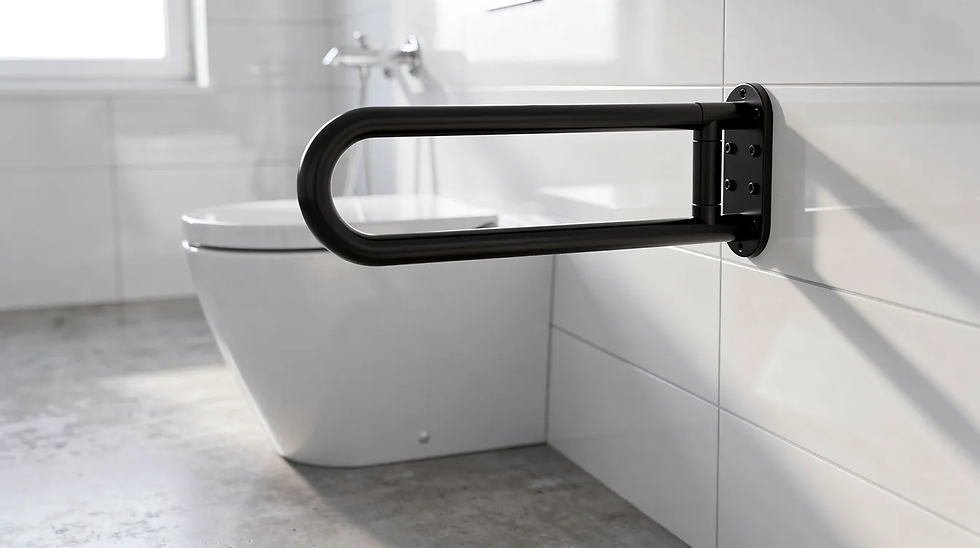
Design Choices: Making Bath Grab Rails Look Modern, Not Medical
Bathroom grab rails for the elderly can be discreet and stylish, coordinating with taps, shower heads, and accessories. Grab rails are available in various finishes like polished chrome and matte black, along with a range of colours. Concealed-fix flanges hide screws for a clean, designer look. Match grab rail finishes with your existing towel holder, robe hooks, and toilet roll holder to create a cohesive style. Grab rails should also contrast with wall colors to aid visibility for seniors with impaired sight.
Stainless Steel Grab Rails
Grade 304 or 316 stainless steel grab rails are the most common choice due to their strength, durability, and rust resistance. Polished stainless offers a mirror-like appearance, while satin or brushed stainless provides a softer, fingerprint-resistant surface. Stainless steel is ideal for wet areas directly in the shower or above the bath, where constant moisture and soap are present. Many elderly users appreciate the metal because it feels familiar - like traditional tapware - and does not date quickly. These rails pair well with classic white tiles and neutral bathroom palettes.
Brushed Nickel and Matte Black Finishes
Brushed nickel grab rails offer a warmer alternative, popular in bathrooms with beige or stone-look tiles. The finish helps hide water spots and fingerprints, making them low maintenance for older homeowners. Matte black grab rails are a contemporary choice that can match black framed shower screens, black mixers, and accessories. These finishes can be just as strong and weight-rated as standard stainless steel models when properly manufactured. Black rails can double as a stylish towel holder beside the bath, maintaining a minimalist appearance and enhancing functionality across the space.
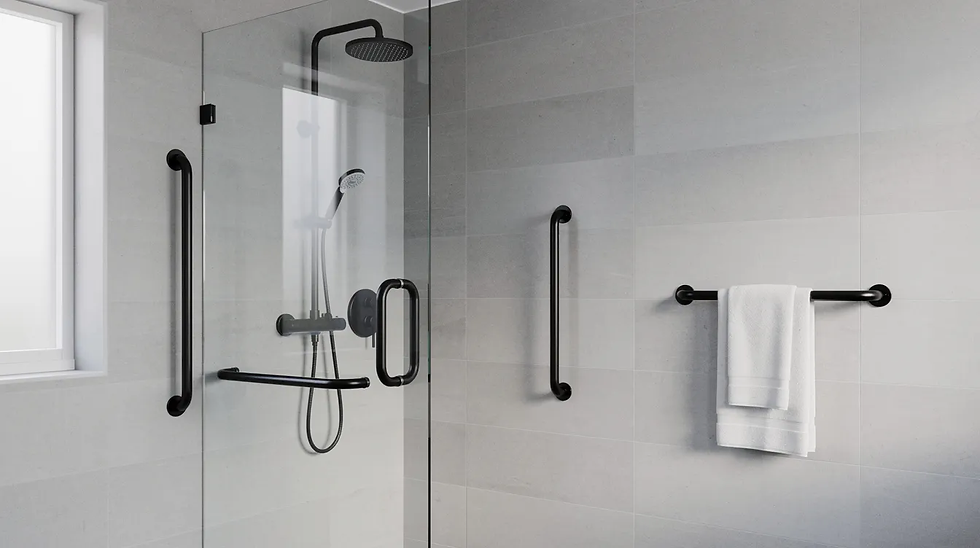
Where to Place Bath and Shower Grab Rails for Maximum Safety
Correct placement is as important as the choice of rail. Ideally, location should follow professional advice from an occupational therapist, but these guidelines give a solid starting point.
The three critical zones are: getting into and out of the bath, standing and turning in the shower, and using the toilet. Rails should be within easy reach at all times, without requiring stretching or twisting, and should be placed where a slip is most likely. Many shower grab rails are installed between 900–1,200 mm from floor level, depending on user height - these are starting points, not strict rules. Measure your parent's reach and adjust accordingly.
At the Bath: Getting In and Out Safely
A vertical or angled grab rail should be mounted near the bath taps or the point where the user steps over the rim. A horizontal rail along the long wall inside the bath supports sitting down and provides secure support when standing up. Place rails so hands can move smoothly from one rail to another without gaps. Rails must not be mounted on weak bath panels or thin plaster alone - they need to fix into studs or solid masonry. Add a non-slip mat in the bath as a complementary measure, while the grab rail provides the reliable hand support.
In the Shower: Standing Balance and Turning
Place a vertical grab rail near the shower entry for stepping over a hob or into a walk-in shower. A horizontal or angled grab rail along the main shower wall at about hip to waist height helps with balance while washing. Avoid installation directly over recessed niches if they weaken the fixing surface - shift the rail slightly to meet studs. Textured or knurled shower grab rails give better grip when hands are soapy, delivering extra support and increased safety for elderly users with weak grip strength. Ensure the rail does not interfere with shower doors or curtains when opening and closing.
Beside the Toilet: Sitting and Standing Support
At least one sturdy grab rail beside the toilet benefits elderly people with arthritis, hip replacements, or low leg strength. Two common setups work well: a horizontal rail fixed to the side wall at roughly 700–800 mm height, or a fold-down rail mounted beside the pan. Integrating a toilet roll holder into the rail keeps everything within arm's reach and reduces the risk of over-reaching or twisting. Rails should allow a comfortable 45-degree bend at the elbow when gripped, as this usually gives the best leverage for security. Trial the height with the user seated before final fixing, using masking tape to confirm the position.
How to Install Grab Rails Safely (and When to Call a Professional)
For elderly users, grab rails must be safely anchored and weight-rated. Improper installation can be more dangerous than having no rail at all. Grab rails must be securely fixed to wall studs for safety, and they must be fixed to withstand a person's full weight.
The basic steps: measure and mark locations, locate studs or solid fixing points, drill using correct bits (tile-specific to avoid cracking), use appropriate wall anchors, and seal around holes in wet areas to protect waterproofing. Installation typically takes 30 minutes to an hour per rail. Grab rails should be installed securely into wall studs - this point cannot be overstated.
Many families choose to hire a qualified tradesperson, especially when working with older tiled bathrooms or waterproofed shower recesses. Tiles require careful technique, and compromising a waterproof membrane can cause long-term damage. Tension-mounted poles for grabs require no tools for installation and can supply temporary support, but they should not replace permanently fixed rails for frail users.
Easy Installation Features to Look For
Look for wide, concealed wall flanges that cover minor drilling errors while still looking neat. Many rails are supplied with stainless steel screws, wall plugs, and clear drilling templates to simplify easy installation. Some grab rail systems use modular brackets and pre-cut lengths, making it quicker for trades to carry out custom layouts around a bath or shower. Check that fittings and anchors are rated to support at least the user's full body weight plus a safety margin - the WHO recommends a minimum 150 kg load. If in doubt, hire a professional to ensure the rail is safe.
Choosing the Right Bath Grab Rail for Your Elderly Parents
Start with a quick assessment: what is the mobility level? Where is support needed most? What is the bathroom layout? What are the style preferences? Stability and comfort are key factors when selecting grab rails for seniors, and home modifications are customized to individual needs for safety.
Involve the elderly parent in decisions - they'll feel respected and are more likely to use the rails consistently, building confidence and preserving independence. An occupational therapist assessment can recommend exact rail positions, heights, and types based on the person's medical conditions. Combining multiple rails across bath, shower, toilet, and near the bathroom doorway gives significantly better protection than a single rail. Choose rails that visually match existing accessories to maintain a homely, accessible feel that suits the space.
Balancing Safety, Budget, and Style
Safety should always come first. Choose rails compliant with relevant building or accessibility standards in your country. Price ranges vary from basic stainless steel rails for tight budgets to premium designer finishes like brushed nickel and matte black. If budget is limited, prioritise at least one high-quality rail at the bath or shower entry point, then add more over time. Multi-function rails - a grab rail that also holds a towel, for instance - offer value and convenience while keeping the bathroom uncluttered. Durable, rust-resistant materials may cost slightly more up front but their durability reduces replacement over the years. Think of it as a smart investment in your parent's life and wellbeing.
Maintaining Bath Grab Rails for Long-Term Safety
Even high-quality grab rails need simple, regular maintenance to stay safe. Wipe rails weekly with mild detergent and water, avoiding harsh abrasives that damage matte black or brushed nickel finishes. Inspect fixings every few months for any movement, rust around screws, or cracked tiles - especially in older bathrooms. Importantly, any rail that feels loose, creaks, or moves under load should be re-secured immediately by a competent person. Replace visibly corroded rails or fittings promptly, particularly in coastal areas where salt air can accelerate wear on surfaces and reduce the security of the installation.
Frequently Asked Questions About Bath Grab Rails for the Elderly
Are suction-cup grab rails safe for elderly parents? No. Suction-only devices are not reliable for bearing body weight and can lose grip when wet or under dynamic load. All weight-bearing rails need mechanical fixing into solid backing. They enhance safety only when properly installed.
What is the recommended height for bath and shower grab rails? Common guidelines suggest 900–1,200 mm from the floor for shower rails and 700–800 mm for toilet rails. However, these are starting points - always measure and adjust for the specific user's height and reach to suit their needs.
Will grab rails spoil a modern bathroom? Not at all. Grab rails are available in finishes including polished chrome, matte black, brushed nickel, and satin stainless steel. With concealed fixings and the right diameter, they look like high-end accessories and blend seamlessly into contemporary design.
How long does installation take? For a qualified tradesperson working on a solid wall with accessible studs, expect roughly 30–60 minutes per rail. Plan the installation proactively - before a hospital discharge or after a near-miss fall - rather than waiting for a serious worry to become reality.
Start with one rail at the most dangerous point in the bathroom, talk to your elderly parents about their preferences, and build from there. A few hours of work today can prevent years of difficulty tomorrow.


Comments